History of GEA
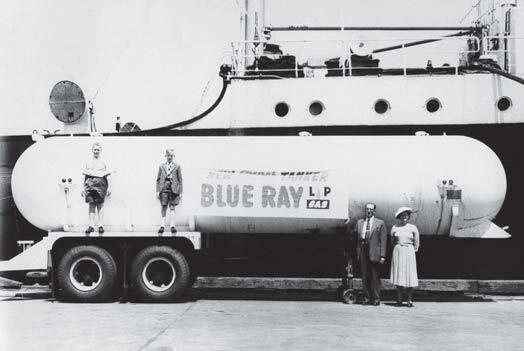
In 1957, Steventon imported the first long-haul LPG tanker into Australia from the United States.
Gas Energy Australia traces its origins to the Australian Liquefied Petroleum Gas Association (ALPGA), founded at a joint meeting of 36
distributors, and equipment and appliance manufacturers in Sydney on 10 February 1958. As Australia's post-war refinery boom created a ready domestic supply of LPG, industry figures recognised the need for shared rules to manage
this new, flammable gas safely and consistently.
Walter Ashton, of the Westralian Farmers' Co-Operative, was elected the Association's inaugural President, supported by Vice-Presidents from AGL and Shell. The founding council set clear objectives from the outset,
studying the safe handling of LPG and approaching government and regulators with one voice on behalf of the whole industry, principles that still guide GEA's advocacy and technical work today.
These objectives quickly translated into action through the Association's technical committees, which became the engine room of its work. Volunteers from member companies devoted their time to developing uniform national standards, laying the groundwork for what remains at the heart of GEA's Technical pillar today. This collaborative, self-regulating approach helped the industry manage its own safety record and build credibility with governments and regulators from the outset.
Membership grew steadily over subsequent decades to encompass producers, distributors, marketers and manufacturers from every state, as LPG expanded from a niche rural fuel into a mainstream energy source for households, industry and transport across the country. Throughout this growth, the Association continued to advocate with one voice to government on
behalf of the industry, a role it maintains to this day.
As the industry matured, so did the Association. It became LPG Australia in 2009, reflecting the growing national scale and sophistication of the sector, before adopting its current name, Gas Energy Australia, in 2012 to better capture the breadth of gaseous fuels it represents. A new
Constitution recognising renewable forms of LPG was endorsed in 2023, opening
the door to bioLPG, renewable LPG and renewable DME.
Today, that founding spirit, bringing industry together to build sound standards and a strong collective voice, continues as GEA leads the sector's transition toward renewable liquid gases.
For more information on the evolution of the Australian LPG industry visit our Publications page for the Then to Now: 50 Years of LPG in Australia or to learn more about Australian gas, LPG and its origins. For the modern and ever-evolving contribution of gas in Australia, checkout Gas Facts.